
Which Nashville Records Are Open
Tennessee law begins with access, but each record set has its own keeper and limits. A public index may identify a party without showing the filed image. A current certificate may require proof of eligibility even when an older index is open at an archive. The table maps the main Nashville record sets before a search or request begins.
| Record Set | Custodian | Online Route | Access Channel |
|---|---|---|---|
| Deeds, liens, plats | Davidson Register of Deeds | Account-gated DavidsonPortal | Portal, copy request, mail, or counter |
| Assessment and GIS | Assessor and Metro GIS | Local property search and Parcel Viewer | Free web search, office, phone, or email |
| Civil and probate cases | Circuit Court Clerk | Free CaseSearch; CaseLink for select images | Index, subscription, counter, or copy request |
| Criminal cases | Criminal Court Clerk | Legacy and CJIS search | Free web search; call or visit for older files |
| Chancery and tax-sale cases | Clerk and Master | Local search and subscription access | Portal, file room, or office request |
| Marriage, business, notary | Davidson County Clerk | Service-specific searches and lists | Web service, inspection, copy request, or counter |
| Vital certificates | Tennessee Vital Records | No general current name index | Application, ID, fee, or archive after transfer |
| Voter registration | Davidson County Election Commission | Identity-verified state lookup | Status check, regulated list order, or office help |
| Custody and registry | Sheriff, TDOC, or TBI | Separate official lookups | Web search plus agency records request |
| Business and licenses | Secretary of State and state boards | Entity and license verification systems | Free search; paid certified products may apply |
| Historical residents | Metro Archives, NPL, and TSLA | Catalogs, indexes, and digital collections | Online, staff request, microfilm, or research room |
Sealed and expunged cases, adoption and juvenile material protected by law, current vital files, Social Security numbers, and protected addresses are not ordinary open portal data. A custodian may release the rest after redaction, which means removal of a protected field rather than closure of the full record. Motor vehicle personal data also has separate federal and state limits.
Why Nashville Records Stay Split
Nashville and Davidson County have shared a consolidated metropolitan government since April 1, 1963. That overlap does not merge every custodian. Metro Clerk handles legislation and routes requests for many executive departments, but the Register of Deeds, County Clerk, Circuit Court Clerk, Criminal Court Clerk, Clerk and Master, Sheriff, and other offices still control their own files.
This geography matters most with old material. A record may be labeled Nashville, Davidson County, a ward, a former municipality, or a neighborhood based on its date. Metro Archives preserves former city, county, mayoral, and personal collections from about 1780 forward. If a portal has no result, the correct next move may be a different local office or an archive search, not a broader spelling guess.
Note: Metro Clerk is a routing point for many departments, not a universal Nashville records custodian.
Nashville Records Under Tennessee Law
The Tennessee Public Records Act, TCA Sections 10-7-501 and following, generally lets Tennessee citizens inspect state and local government records unless another law makes the material confidential. The definition reaches paper, maps, photos, microfilm, sound, film, and electronic data made in official business. Section 10-7-503 supplies the working access right, while Section 10-7-504 gathers many confidentiality rules.
A custodian must provide access or a denial promptly when possible. If not, the office has seven business days to produce the record, deny it with a legal ground, or explain why more time or detail is needed. That period is a response deadline, not a promise that every large request will be complete in seven days. The Office of Open Records Counsel TPRA explanation also describes informal help when a denial or fee dispute cannot be resolved with the custodian.
Nashville Records Offices and Portals
Office choice controls both the result and the copy route. These four contacts cover the main land, property, civil court, and Metro request channels. Hours are weekday public hours published in the Nashville research, and a call before travel can confirm a holiday closure or the right file room.
Davidson Register of Deeds
300 Deaderick Street
Nashville, TN 37201
615-862-6790
Weekdays, 8:00 a.m. to 4:30 p.m.
Davidson County Assessor
700 President Ronald Reagan Way, Suite 210
Nashville, TN 37210
615-862-6080
Weekdays, 8:00 a.m. to 4:30 p.m.
Circuit Court Clerk
1 Public Square, Suite 302
Nashville, TN 37201
General Sessions Civil has a separate Second Avenue office.
Metro Clerk Records Desk
1 Public Square, Suite 205
Nashville, TN 37201
615-862-6770
metro.clerk@nashville.gov
Accessing Nashville Deed Records
The Register of Deeds records deeds, deeds of trust, releases, liens, powers of attorney, plats, amendments, and other land instruments. Its official document-code list is the best guide to categories. The Davidson recorded-document portal requires an account, password, credit card registration, and user ID. Official pages do not state the index start year or current image and subscription price.
Do not read the portal's September 11, 2017 installation date as a coverage date. When the online account does not answer the question, use the office copy route, send the custodian form by its allowed mail, electronic, or in-person channel, call 615-862-6790, email register@jisnashville.gov, or visit the counter. A deed index points to a filing; it is not the same as a certified copy of the filed instrument.
- Custodian
- The office legally responsible for a record.
- Index
- A list used to locate a filing, often by party, date, or document number.
- Image
- A view of the filed document, which may require an account or fee.
- Certified copy
- A copy authenticated by the keeper for formal use.
- Exemption
- A law that permits or requires a record or field to be withheld.
Nashville Property Records Have Roles
One property can produce several records, each with a different task. The Assessor ties a current owner name to an address, parcel, and assessment. Metro Parcel Viewer adds daily-updated ownership, property, zoning, assessment, permit, and map histories. The Trustee handles current tax bills and receipts. Only the Register of Deeds records the legal instruments that transfer or encumber land.
The free Parcel Viewer accepts a partial, starts-with owner name and can export results to Excel, though results stop at 4,000 parcels. Narrow a common surname before export. Then distinguish the situs address, which is the parcel's physical location, from the mailing address used for tax mail. Neither proves where a person lives. For a failed web search, contact the Assessor by phone or email, use the GIS contacts, inspect at the office, or file a focused request.
Keep the roles attached. An assessed owner, deed grantor, lien party, and permit contractor may all be different people. A shared name alone does not prove identity.
Nashville Court Records Stay Separate
There is no complete statewide Tennessee trial-court name search. Nashville civil, probate, and General Sessions Civil cases use free CaseSearch. Its results can show parties, case type, filing date, and case detail, but the free tool excludes document images. Subscriber CaseLink adds advanced access and select images. A copy request should include the case number.
| CaseSearch Field | Input | Use |
|---|---|---|
| Party Name | Text | Person or business search key |
| Party Type | Dropdown | All, plaintiff/petitioner, or defendant/respondent |
| Office | Dropdown | General Sessions, Circuit, or Probate |
| File Date From | Date | Beginning of filing range |
| File Date To | Date | End of filing range |
Criminal and General Sessions Criminal cases use a separate clerk and portal. Legacy coverage begins in 1980, while General Sessions dispositions begin January 11, 2000, and state trial dispositions begin July 11, 2000. Call or visit for pre-1980 records. Chancery matters use Clerk and Master search, subscription, and file-room channels. Expunged cases do not appear, and sealed or protected files require exact legal treatment.
Nashville Vital Records Change Custody
Current certificates are not an open name directory. Tennessee Vital Records keeps birth records for 100 years and death, marriage, and divorce records for 50 years before transfer to the Tennessee State Library and Archives. Current requests require the right application, event facts, eligibility basis, identification, signature, fee, and mail, counter, or online delivery route. Davidson County health services can issue registered statewide birth and death certificates.
The official Tennessee vital-record application menu shows the forms used for Nashville certificate requests.
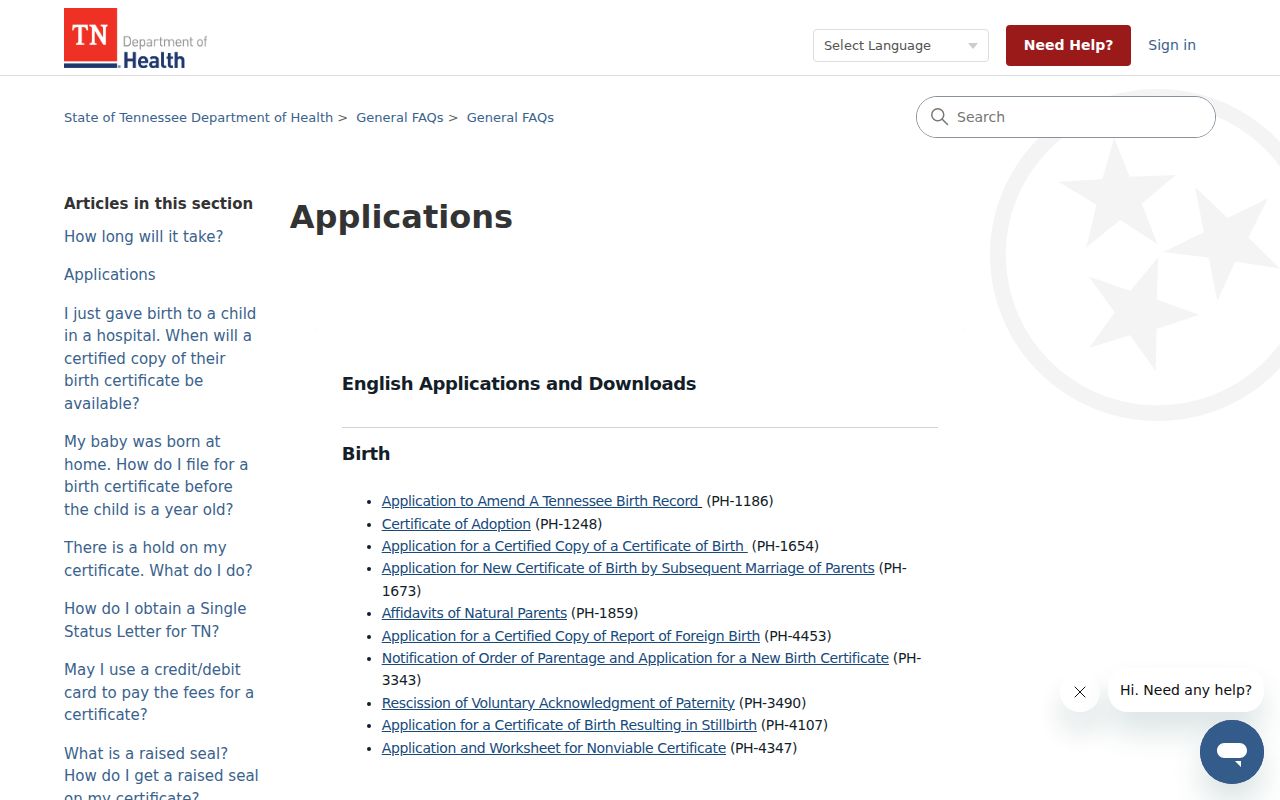
The form route matters because a certified certificate and a court file are different products. A divorce certificate comes from vital statistics, while pleadings and orders come from the Circuit Clerk, subject to any seal or redaction.
After transfer, use the TSLA historical vital-record route and Metro Archives. Local holdings include Nashville births from 1881 through 1913, Nashville deaths from 1874 through 1913, narrower Davidson County series, and marriage records from 1788 through 2017. Counter service, archive indexes, research-room access, and staff requests remain essential when no current online name index exists.
Nashville Custody and Registry Records
The Davidson County Sheriff publishes active-inmate and recent-booking searches. The advanced form can use first name, last name, date of birth, OCA, warrant, or CIS identifiers. A match covers county custody only. Status and bond data can change, so verify with the Criminal Clerk or call the Sheriff's information center. The Records Center also accepts inmate-related requests by web form or at its weekday counter.
That desk does not supply Metro police reports, accident reports, or mugshots. Those belong in the MNPD records process, where the report type, requester eligibility, open-investigation status, and fee can affect release. State felony custody and supervision are searched separately through TDOC FOIL.
The TBI registry gateway displays the warning that applies before an official registry search.
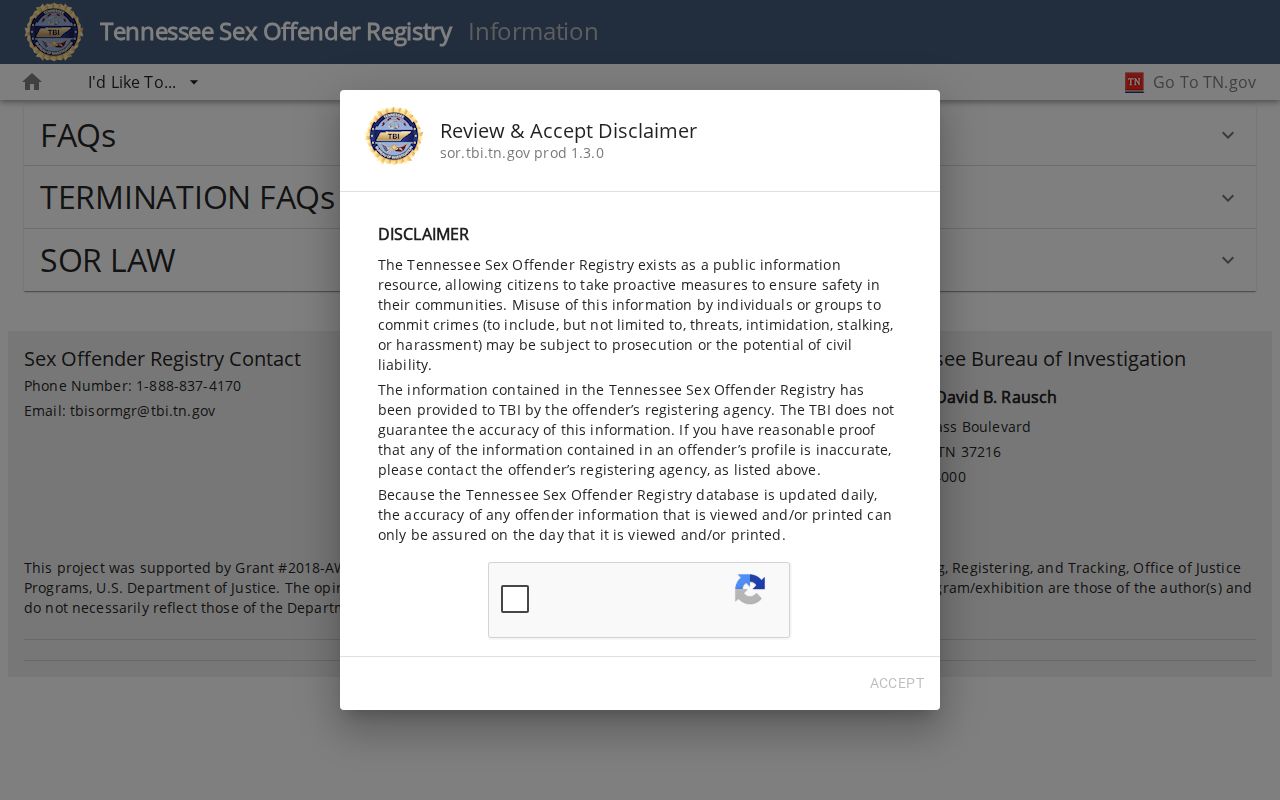
A registry result can include aliases, classification, addresses, vehicles, offenses, supervision, and identifying details. It must not be used to threaten, stalk, intimidate, or harass. Verify the identity and current status with the responsible agency.
Nashville Codes Records Changed Portals
Metro Codes links names to places through permit and violation files. Current ePermits searches can use permit number, address, APN, owner, or contractor. Results may show the permit number and type, address, property owner, contractor, status, signoffs, inspections, violations, and downloadable reports. Data.Nashville, short-term-rental data, violation maps, and Parcel Viewer offer other routes.
The Metro Codes public-records hub now points users toward the live services and request options.
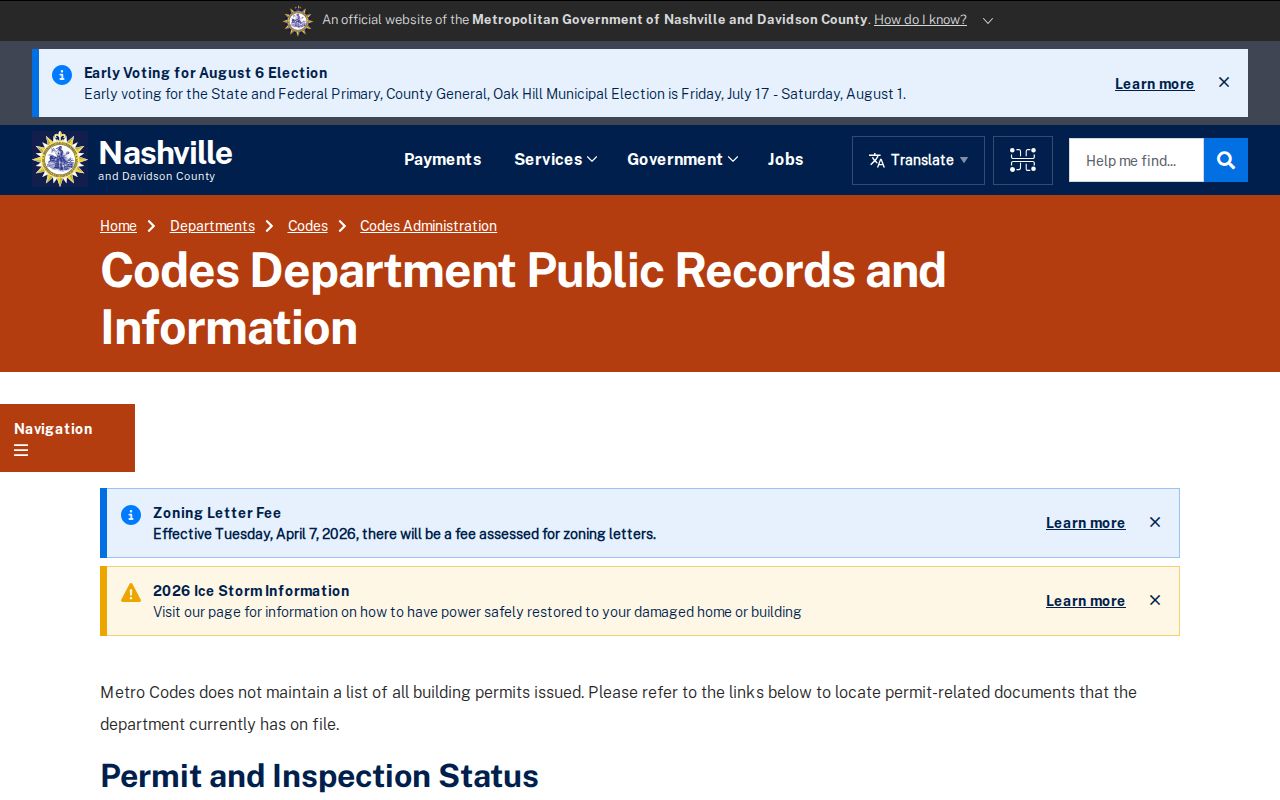
The screenshot also marks the practical fallback. Codes records can be requested through Metro, by phone at 615-862-6500, or at the first-floor office at 800 President Ronald Reagan Way on weekdays from 7:30 a.m. to 4:00 p.m.
Codes Permit reports ended in the older Document of Record Search after May 15, 2026. Current work should begin in ePermits, but that migration does not erase an older permit. Use the office and records-request channels when a historic query does not return through the current interface.
Nashville Property Alert Has Limits
The Davidson Register of Deeds offers a free, name-based Property Alert. An enrolled owner receives an email when a document is recorded under the watched name. That can prompt a fast check with the office and help a family notice an unexpected filing tied to inherited land or a shared family name.
An alert does not block recording, lock title, prove fraud, or replace title advice. Common names can also produce notices for someone else. Confirm the document number, parties, legal description, and parcel with the Register of Deeds. Legacy sensitive data in a recorded instrument requires a lawful correction or redaction process through the custodian, and changing an index does not call back copies already distributed.
Note: Property Alert detects a name event; the recorded filing and land description supply the evidence.
Nashville Records Fees and Copies
Inspection is free under the Tennessee access framework. Metro's adopted fee schedule sets ordinary black-and-white copies at $0.15 per page and color at $0.50 per page. Portable media and shipping are charged at actual cost, and wage-based labor may apply after the first free hour. Ask for an estimate, narrow a broad date range, and choose inspection or electronic delivery when it meets the need.
| Copy or Service | Published Charge |
|---|---|
| Metro inspection | Free |
| Metro black-and-white page | $0.15 |
| Metro color page | $0.50 |
| Metro labor | Wage-based after first free hour |
| General Sessions certified copy | $5 plus $0.50 per page |
| Vital-record search and one copy if found | $15, nonrefundable |
Fees depend on the product. A free docket view is not a free certified court copy, and a no-match vital search still consumes the search fee. The Register of Deeds does not publish the current portal image or subscription price in the inspected official pages, so obtain a quote instead of relying on an old figure.
Request Nashville Public Records
A focused request saves time. Metro's general portal does not govern every Nashville office, so begin with the record type and lawful custodian. Copies generally require a written request, while an oral inspection request may be accepted. Proof of Tennessee citizenship can be required for a request, although already published Metro data does not need such proof.
- Name the record and custodian. Give the department, date range, case, parcel, document number, or person role when known.
- Check the public route. Use an official index, open-data set, or archive catalog first, then note what it did not supply.
- Choose the office channel. Submit through the correct portal, form, email, mail address, fax, phone-assisted route, or counter.
- State the format. Ask for inspection, electronic copies, paper copies, or certification and request a cost estimate.
- Track the response. Clarify or narrow if needed. A denial should cite its legal ground.
- Escalate carefully. Contact the office public-records request coordinator, then seek Office of Open Records Counsel help; court enforcement remains the formal remedy.
Metro Clerk accepts requests online, by email at metro.clerk@nashville.gov, by mail or in person, by fax at 615-880-3733, and by phone for routing help. Separate elected offices may require their own policy or form. For voter-file detail and its distinct use rules, use the Nashville voter records resource.
Lawful personal use. Open records support genealogy, estate work, civic review, property research, and scam checks. Tennessee law can punish threats, stalking, harassment, or misuse of protected data.